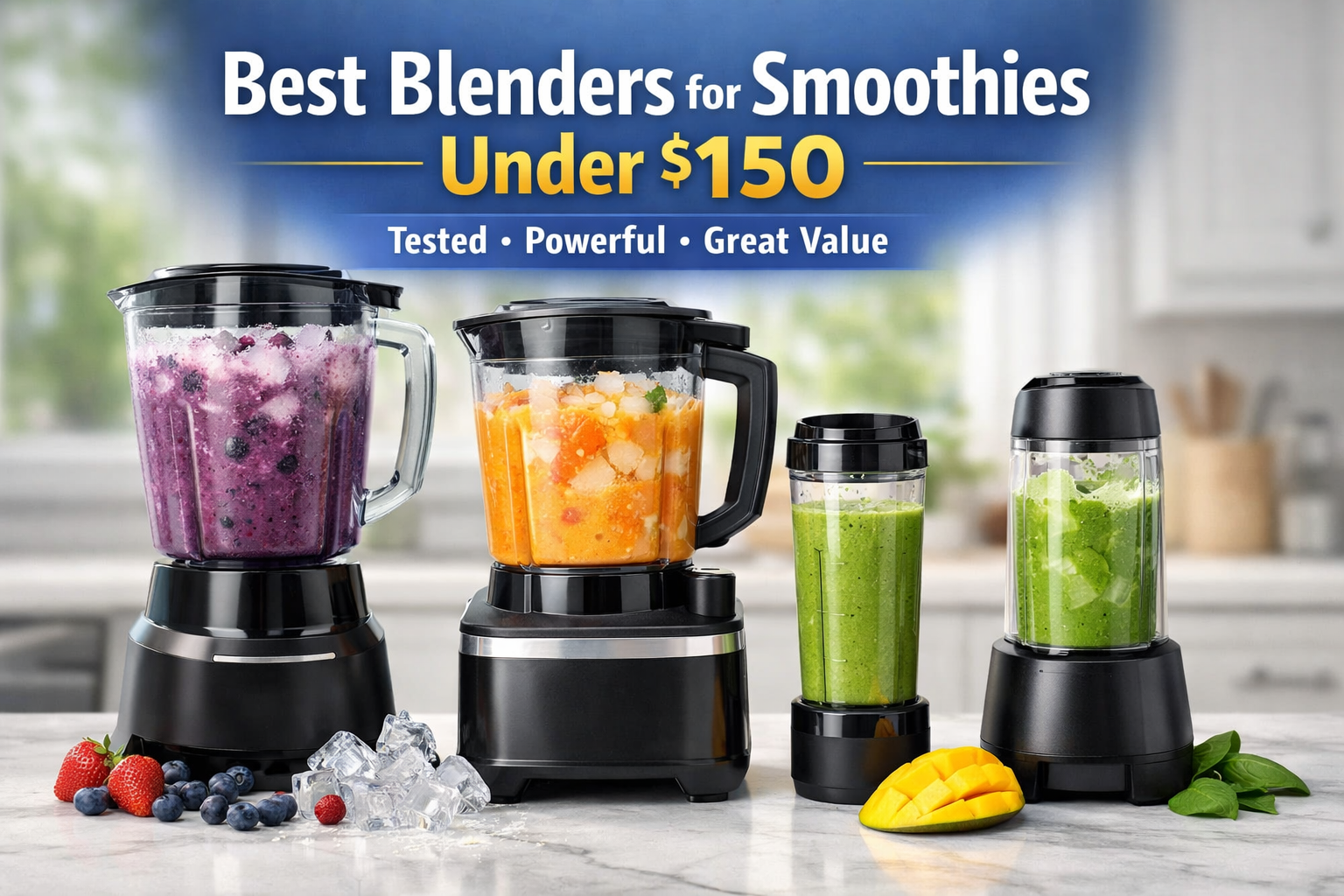
Best Blenders for Smoothies Under $150 (Tested & Reviewed)
If you’re shopping for a smoothie blender under $150, you’re probably trying to avoid two things: chunky results and wasted money. Many budget blenders look good on paper but struggle with frozen fruit, stall on ice, or slowly lose power after a few weeks of regular use. The result? Thin smoothies, constant shaking, or a blender you stop using altogether.
To help you buy with confidence, we tested and compared popular blenders in this price range based on smoothie texture, ice-crushing performance, motor strength, capacity, and ease of everyday use. We focused on models with consistently strong customer feedback and practical designs—covering both full-size countertop blenders and personal-serve options, depending on how you make smoothies.
The blenders below deliver the best balance of performance, reliability, and value for the money. If you want smooth, drinkable smoothies without overspending—or upgrading again in a few months—these are the options most likely to be worth it.
Smoothie Blenders Under $150 — At-a-Glance
| Blender Model | Type | Wattage | Capacity | Best For |
| 1. Ninja BL660 Professional Compact | Full-Size | ~1100 W | 72 oz | Powerful multi-serve smoothies |
| 2. Ninja BN751 Professional Plus DUO | Full-Size | ~1400 W | 72 oz | Preset smoothie programs |
| 3. Ninja Fit Compact Personal | Personal | ~700 W | 16 oz | Single-serve smoothies |
| 4. NutriBullet Full-Size Combo NBF50500 | Combo (Full + Personal) | 1200 W | 64 oz + Cups | Smoothies + multi-use |
| 5. Hamilton Beach Power Elite 58148A | Full-Size | 700 W | 40 oz | Everyday budget smoothies |
| 6. Black+Decker Quiet Blender B0CBGFJD6P | Full-Size | 900 W | 48 oz | Quieter blending & batches |
| 7. Chefman Obliterator 48 oz | Full-Size | 1380 W | 48 oz | Ice-crushing & tough blends |
1) Best Overall: Ninja BL660 Professional Compact Smoothie & Food Processing Blender
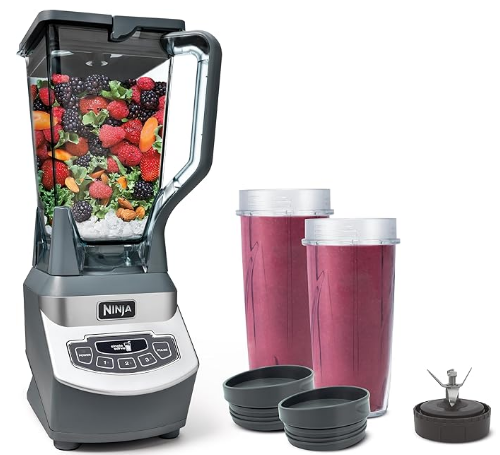
Best for: Households wanting powerful full-size smoothies and frozen drinks.
A robust and versatile countertop blender with an ~1100 watt motor and spacious pitcher, the Ninja BL660 is a consistently popular choice for smoothies, ice, sauces, and more — regularly featured in Amazon blender categories and budget lists.
Pros
- Excellent ice-crushing performance
- Includes large pitcher + personal cups
- Good balance of power and value
Cons - Bulkier countertop footprint
- Louder than simpler blenders
2)Best Value: Hamilton Beach Power Elite Wave Action Blender (Model 58148A)
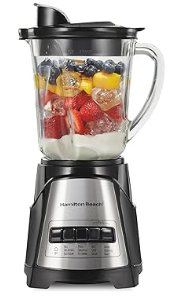
Best for: Everyday smoothies and basic blending without the premium price tag.
The Hamilton Beach Power Elite Wave Action Blender (58148A) is a budget-friendly full-size model with 700 W peak blending power and a patented Wave-Action system that continuously forces ingredients down into the blades for smoother results. It comes with a 40 oz dishwasher-safe glass jar and multiple blending functions, making it a reliable choice for smoothies, milkshakes, and blended drinks at an affordable price point.
Pros
- Glass blending jar resists staining and odor
- Multiple functions for smoothies, puree, crush ice, and more
- Easy to clean with dishwasher-safe parts
Cons - Not as powerful on very hard ice or frozen chunks
- Fewer speed settings than more advanced models
3) Best for Single Serve: Ninja Fit Compact Personal Blender QB3001SS
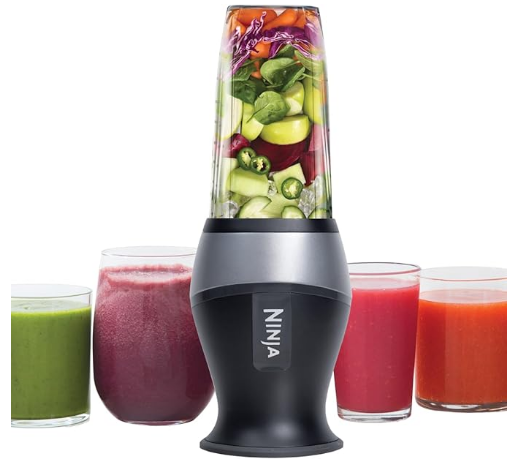
Best for: Single-serve smoothies on the go.
A compact personal blender with ~700 W power and two 16 oz cups — ideal for quick smoothies or shakes without a large pitcher. Personal Ninja blenders show up in smoothie blender categories alongside countertop models.
Pros
- Compact and easy to store
- Great for daily personal smoothies
- Simple to clean
Cons - Smaller batch capacity
- Motor and cup size limit frozen kernels/ice handling
4) NutriBullet Full-Size Blender Combo 1200W (Model NBF50500)
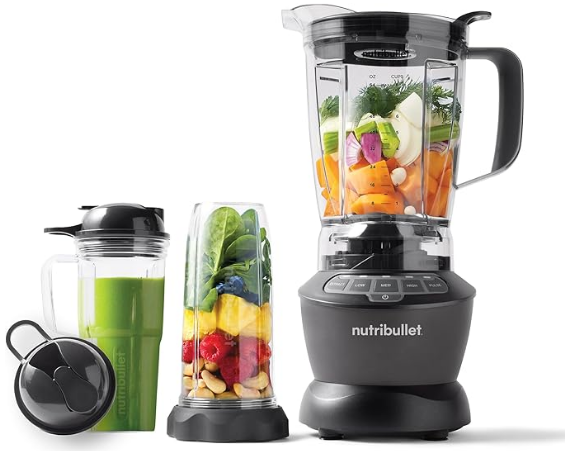
Best for: Smoothie lovers who want both single-serve convenience and a full-size pitcher.
The NutriBullet Full-Size Blender Combo 1200W (NBF50500) combines NutriBullet’s signature nutrient-extraction power with the flexibility of a traditional countertop blender. It features a 1200-watt motor, a large pitcher for batch smoothies, and multiple personal cups for grab-and-go blends. With three precision speeds, pulse, and an extract function, it handles frozen fruit, leafy greens, and thicker smoothie blends better than most personal blenders in this price range.
Pros
- Strong 1200W motor for frozen fruit and greens
- Includes both a full-size pitcher and personal cups
- Good balance of power, versatility, and price
Cons
- Takes up more counter space than a basic personal blender
- Not the quietest option when blending ice
5) Ninja BN751 Professional Plus DUO Blender
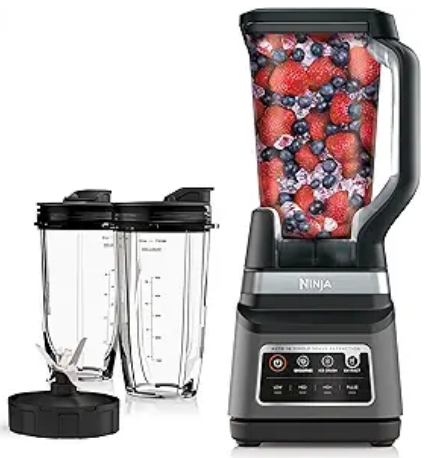
Best for: Users who want preset programs and strong multi-use blending.
A step up with ~1400 W peak power and Auto-IQ blending programs that help automate smoothie, frozen drink, and nutrient extraction tasks — uncommon at this price range but found in Amazon’s ~$100–$150 blender section.
Pros
- Multiple Auto-IQ programs
- Great for smoothie bowls & thick blends
- Large pitcher capacity
Cons
- Slightly higher average price
- A bit more complex than basic models
6) Black+Decker Quiet Blender with Cyclone Glass Jar (Model B0CBGFJD6P)
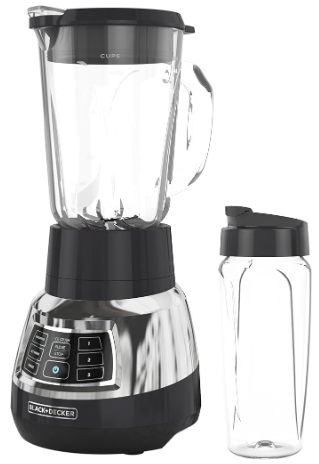
Best for: Quieter smoothies with a classic glass pitcher.
The Black+Decker Quiet Blender with Cyclone Glass Jar blends performance and comfort thanks to Quiet Technology and a 900 W motor that delivers strong vortex blending through its 6-tip serrated blade design. It includes a 48 oz cyclone glass jar plus a 24 oz Tritan personal blending jar with travel lid, great for both batch smoothies and single-serve drinks.
Pros
- Reduced noise during blending
- Digital controls with 3 speeds + smart functions + pulse
- Excellent vortex blending with serrated blade tech
Cons - Slightly bulkier than basic blenders
- Larger footprint on small countertops
7) Chefman Obliterator 48 oz Countertop Blender
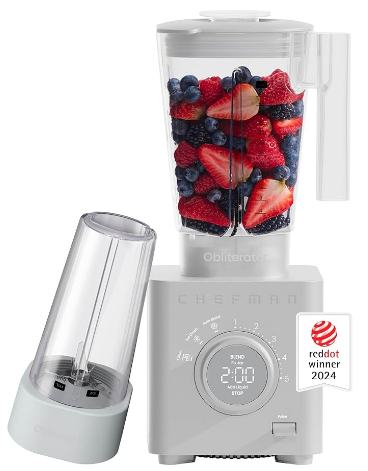
Best for: Smoothies and ice-crushing power with beginner-friendly controls.
The Chefman Obliterator 48 oz Countertop Blender packs an impressive 1380 W motor and auto-blend function designed to crush ice, nuts, and frozen fruit into smoothies with minimal effort. Its intuitive dial panel includes multiple speeds and a pulse option, and the 48 oz Tritan blending jar holds enough smoothie for the whole family.
Pros
- Very strong motor for tough ingredients
- Includes auto-blend and pulse controls
- Comes with travel jar(s) depending on bundle
Cons - Bigger power draw than simpler models
- Higher price can fluctuate above budget range (check current listing)
See rating and current pricing on Amazon
Smoothie Blender Buyer’s Guide: What to Look For
Choosing the right blender under $150 doesn’t have to be complicated. The key is focusing on the features that actually affect smoothie quality, durability, and ease of use — not marketing buzzwords.
1. Motor Power (Watts)
Motor strength determines how well a blender handles ice, frozen fruit, and fibrous ingredients like kale or spinach.
- 700–900 watts: Suitable for basic smoothies with softer ingredients.
- 1000 watts and above: Better for frozen fruit, ice, and daily use without stalling.
If you blend frequently, higher wattage usually means smoother results and less strain on the motor over time.
2. Jar Capacity and Design
Choose a size that matches how you make smoothies.
- Full-size pitchers (48–72 oz): Ideal for families or batch blending.
- Personal cups (16–24 oz): Best for single servings and on-the-go use.
Glass jars resist stains and odors but are heavier. Plastic jars are lighter and more common at this price point.
3. Ice-Crushing Performance
For smoothies, ice performance matters more than speed count.
Look for:
- Strong, multi-edge blades
- Vortex or wave-style blending systems
- A pulse or ice-crush function
These features help eliminate chunks and produce smoother, drinkable blends.
4. Speed Controls and Presets
More control means better texture.
- Simple dial controls: Easy and reliable for everyday blending.
- Multiple speeds and pulse: Helpful for thicker smoothies and frozen ingredients.
- Preset programs: Convenient for one-touch smoothie making.
5. Ease of Cleaning
A blender that’s hard to clean often gets used less.
Prioritize:
- Dishwasher-safe jars and lids
- Wide jar openings
- Minimal crevices around the blade assembly
Quick cleanup encourages consistent use.
6. Durability and Warranty
Budget blenders vary widely in build quality.
Look for:
- Reinforced jars and tight-fitting seals
- Solid base weight for stability
- A clear warranty (longer coverage is a good sign)
Quick Buying Tips
- If you blend daily, prioritize motor power and ice performance.
- If you make smoothies on the go, choose a model with personal cups included.
- If you blend for multiple people, a larger pitcher will save time.
Frequently Asked Questions (FAQs)
What wattage is best for smoothies?
For smoothies, 700 watts is the minimum, but 1000 watts or more is ideal if you regularly use frozen fruit, ice, leafy greens, or protein powders. Higher wattage helps produce smoother textures and reduces strain on the motor over time.
Are blenders under $150 powerful enough for frozen fruit?
Yes — many blenders under $150 can handle frozen fruit well, especially models with strong motors (1000W+), sharp multi-edge blades, and vortex-style blending designs. They may not match high-end blenders, but they’re more than capable for daily smoothies.
Is a personal blender or full-size blender better for smoothies?
It depends on how you blend:
- Personal blenders are best for single servings, quick cleanup, and portability.
- Full-size blenders are better for families, meal prep, and thicker or larger batches.
- Combo blenders offer both options and are a good middle ground.
Can these blenders crush ice?
Most of the blenders in this guide can crush ice, but results vary. For best performance, look for:
- A motor rated 900W or higher
- A pulse or ice-crush function
- Adding liquid before ice to reduce strain
Crushed ice for smoothies is fine; frequent ice-only blending may shorten motor life on lower-powered models.
Are glass or plastic blender jars better?
- Glass jars resist odors and scratches but are heavier.
- Plastic jars are lighter and more common at this price point, though they may scratch over time.
Both work well for smoothies — durability and weight are the main differences.
How long should a budget blender last?
With normal home use (a few times per week), a good blender under $150 should last 2–4 years or more. Daily use with frozen ingredients may shorten lifespan on lower-powered models, which is why wattage and build quality matter.
Do I need preset programs for smoothies?
Preset programs are convenient but not required. A blender with multiple speeds and a pulse function can produce equally good smoothies if you’re comfortable adjusting manually.
Should I buy a blender based on reviews alone?
Reviews are important, but focus on patterns, not one-off complaints. Consistently high ratings combined with strong motor specs and suitable capacity are a better indicator of long-term satisfaction.